Category: Uncategorized

  • Eye Color Change Surgery

    In only a few months or years, it will be possible to have an eye surgeon perform eye color change surgery to receive beautiful blue eyes.

    You know how compelling and attractive blue eyes are, and many of us wish we had such a beautiful eye color…..  You may not have to wait much longer to make this dream come true: Scientists are in the last stages of research and clinical trials to make this reality.

    Eye Color Change Surgery Possible Soon:
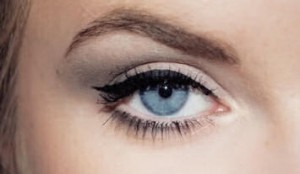
    Eye Color Change Surgery
    Getting great looking blue eyes is the wish of many – Soon possible?

    Until now it was only possible to change the color of your eyes with colored lenses. And with colored lenses come all the disadvantages of wearing contacts like the possiblity to lose them, potential eye irritation and heaps of other disadvantages. With the prospective eye color change surgery, you go for a short, non-invasive procedure at your ophtalmo and bang! Your eyes are permanently blue.

    The only advantage of the contacts in comparison to an eye color change surgery is, that you can take the lenses out and you have your original eye color back. With eye color change surgery, the change is permanent and can not be reversed. So if you decide you want blue eyes and have the procedure, make sure it’s really what you want!

    Eye Color Change Surgery For Blue Eyes

    With eye color change surgery it is only possible to change the color to blue. That’s because we basically all have blue eyes. It’s only a very thin top layer in our iris (the colored part of the eye) that covers the blue basic color. When you have i.e. brown eyes, it’s a thin brown pigment layer on top of the iris that makes for your eye color.

    Stroma Laser For Eye Color Change Surgery

    Here’s how an eye color change surgery shall work. The information is still somewhat imprecise, as the final procedure is not yet approved by the FDA and still in development.

    A patient’s eye will be treated with a so called Stroma laser. This laser will be pointed at only the very thin layer of pigment covering the underlying blue color. Over a period of a few weeks, the body will then start to remove the destroyed brown color cells and over time the underlying blue color will appear. Initially the eyes will become darker, before the lighter blue color will appear.


    Eye Color Change Surgey by Stroma Medical – Videos

    Watch the three videos below to find out how eye color change surgery will work and who this new company is. These videos also talk about fund raising for a start-up company, but the information about the new procedure flows into the conversation at all stages, and you will find out who the people behind the company are. Worthwhile watching!:

    Even though it’s not immediately available, looks as if the eye color change surgery is only around the corner, these people seem to have their act pretty much together!

    There are other means than colored contact lenses that are also not yet approved in the USA but seem to be used in other countries to change the color of the eyes: Cosmetic iris implants (medically indicated iris implants are apporved, as they can help people who have eye injury or birth defects to have a normal look). In this procedure a different color artificial iris is implanted with a surgical procedure into the eye. That seems to be quite risky, and different studies have pointede out the risks of iris implant procedures, which can be blindness, glaucoma, scarring of the cornea, sensitivity to light or the development of cataracts.

    In comparison, the Stroma laser surgery seems to be less invasive but nevertheless: Doing eye color change surgery only for cosmetic reasons still bears risks – consider if you want to risk going blind at worst, before you decide to have eye color change surgery for nice blue eyes….
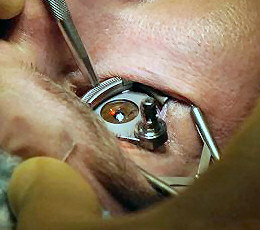
     

  • Getting A Second Opinion Before Eye Surgery

    When you are due for eye surgery, you know that it’s an important intervention that has it’s risks. It’s therefore smart, to make sure you are doing the right thing and that eye surgery for your case is the right thing to do.

    Talking to Previous Patients before Eye Surgery

    It’s a good idea to talk to former patients of your eye surgeon who underwent the same procedure as is proposed for you. Your eye surgeon should be ready to provide you with a list of people who had eye surgery and who are ready to talk with you. Naturally, he will only provide you with people who are happy with the outcome of their eye surgery, but they will be able to tell you about their experience. Try to get a list of people who were operated on recently and some that had their eye surgery about a year ago.

    Getting A Second Opinion Before Eye Surgery

    Eye SurgeryAfter a consultation, never feel that you are obligated to use that surgeon and have him perform eye surgery on your eyes . You are completely free to talk to other surgeons as well. And don’t feel that you are offending anyone. It has long been an accepted practice to seek a second opinion before eye surgery, and most doctors would even urge their patients to do so.

    After all, these are your eyes and it’s your perfect right to consider all options, before you have a procedure that probaly will help, but does have it’s risks….

    Professional Associations For Lasik Eye Surgeons

    These professional associations also provide additional information and have certification programs for lasik eye surgeons:

    The American Board of Ophthalmology (ABO) does not provide any evaluation specific to refractive eye surgery. Certification is valid for a lifetime, or 10 years if recently certified. ABO certification would be conspicuous by its absence, but not terribly important by its presence.

    The American Board of Eye Surgery (ABES) is an ophthalmic group that provides procedure specific certification. They do have peer-reviewed certification for LASIK, and RK, but not PRK, LASEK, CK, LTK or any other refractive procedure. ABES LASIK certification is valid for seven years.

    The Council for Refractive Surgery Quality Assurance (CRSQA) is a nonprofit consumer/patient organization that evaluates a surgeon based upon actual patient outcomes. The surgeon and his eye surgery results is reevaluated every three months.

  • Outcome Of Lasik Eye Surgery

    The outcome of Lasik eye surgery is generally good, but like any other procedure, there is no 100% success rate, not even for Lasik eyes surgery!  Here are a few more questions to ask your eye surgeon before Lasik eye surgery:

    Measurign Your Vision Before Lasik Eye Surgery

    Let’s first explain how your vision is measured with the Snellen test, that’s the chart that we all know and the test that we have certainly all performed at least once in our lives: The Hughe ‘E’ on top, and then consecutively smaller letters further down. The chart is usually set up on a wall 20 feet away.

    To determine what the vision of a person is, two numbers are used, separated with a slash.

    20/20‘ means that the person is able to see a letter from 20 feet away with the same clarity that a normal sighted person can see it. (20 feet for me, same as 20 feet for normal sight).

    20/40‘ means that the patient can see soemthing 20 feet away with the same clarity that a person with normal vision can see when it’s 40 feet away. Means before an item becomes clear this person needs to approach a lot closer. This is worse than normal vision.
    20/10‘ means that the patient can see something 20 feet away with the same clarity that a person with normal vision can see when it’s 10 feet away. Means an item becomes clear way before normal people can distinguish details, eagles eyes! 20/10 is better than normal vision.

    Ask your eye surgeon what the percentage of people is that reach 20/40 vision or better. It’s the accepted norm, that about 90% of the patients reach this value. If you are told a higher number, you should ask for proof. Follow up with a second question and ask how many reach normal vision (20/20), or even better, after the operation. The normal percentage for this outcome is about 50%.

    What Could Diminish The Success Of Lasik Eye Surgery For You:

    Also be aware, that if today before the operation your own correction in diopter corresponds to one of the conditions below, the probability to reach an uncorrected normal vision of 20/20 is lower, and you are certainly not an ideal candidate for for refractive surgery. If your eye surgeon tells you differently, look for an other one.

    • Higher than 10.00 diopter (myopia = you are unable to see objects far away, also called nearsighted or shortsighted)
    • More than +3.00 diopter (hyperopia = you are unable to see near objects, also called farsighted or longsighted)
    • Astigmatism greater than 2.00 diopter (astigmatisme = uneven radius of the cornea that results in distorted images)

    Before you decide to have Lasik eye surgery, consider these facts, sometimes glasses or contacts are a better solution than Lasik eye surgery!